
The posts are the fence
Fence installation and repair in Rome, GA
Boards gray, a gate stops latching, a section leans after a storm, and all three are usually reporting on what is happening at ground level. Red clay makes that harder than it has to be, because a hole dug in clay and filled back in holds water like a bucket and the post stands in it. Which is why a fence can look sound from the street and be finished at the bottom.
Why people call about a fence
- A gate that has to be lifted or dragged, or has stopped latching altogether
- Posts that move when you push on the fence, or a run that has gone out of plumb
- Posts dark and soft right at the dirt line while the wood above them is fine
- Boards cupping, splitting, or coming away from the rails
- A top line gone wavy, so the run no longer reads straight from the street
- A section flattened by a limb, a storm or a vehicle
- Chain link gone slack between posts, or a top rail pulled out of its fitting
- Vinyl panels cracked at an impact, or popped out of the rails
- A new dog, a pool, or livestock to keep in, and a yard that will not hold any of them
- A boundary with nothing on it, where privacy is the whole point
How a fence job goes
-
The posts are the job, and the ground decides the posts
A fence is a row of posts with material hung between them, so almost every failure is reporting on something happening at ground level. Red clay is the local complication. Its particles are fine and flat, so it holds water instead of passing it through, and a hole dug in clay and filled back in behaves like a bucket: the post can be standing in water days after the yard has dried out. The same clay swells when it takes water and shrinks through a dry August, and that seasonal movement is what walks a post out of plumb over a few years. Depth is not one number either. It answers to the height of the fence above ground, because a tall fence is a long lever, to whether that post is carrying a gate or turning a corner, and to what the hole actually hits. On the ridges around here rock can stop you short of two feet, and the plan changes at that hole rather than at the next one.
-
The line and the slope get settled before anything is dug
Corners, gate positions and where the run sits relative to the boundary all get agreed on the ground first, because a fence is the one thing on a property that is difficult to move six inches after the fact. Slope is the decision most people do not see coming. A fence either steps down a hill in level sections, which reads crisp from the street and leaves a triangle of daylight under each step, or it racks and follows the grade, so the top line runs parallel to the ground and the pickets sit slightly off vertical. On a gentle fall either one works and it is a matter of taste. On a steep one the ground makes the choice, and it is worth making it deliberately, because it is the difference between a bottom edge a dog cannot get under and a row of gaps.
-
Gates are built as their own problem
The gate is the only moving part in the whole fence, and it is where most of the complaints start. It hangs entirely off one post, and every swing levers that post toward the opening, which is why a gate post is a bigger piece of work than the posts either side of it. A sagging gate is usually that post moving, or a frame that has racked out of square. The brace is the part that gets fitted backwards: a wooden diagonal works by pushing, so it runs from the bottom corner on the hinge side up to the top corner on the latch side, while a cable and turnbuckle works by pulling and runs the other way, from the top hinge corner down toward the latch. Put in the wrong direction it does nothing at all, and plenty of sagging gates have a brace on them already. Width counts too, because a gate wide enough to walk a mower through and one wide enough to back a truck through are not the same build.
-
Material changes what fails, not whether it fails
Wood grays, cups and rots, and it rots first wherever it stays wet: the bottom of the boards, the end grain, and the post at the dirt line, especially where mulch or a flower bed has been heaped against it. Vinyl does not rot and does not want paint, and it fails differently. An impact cracks a panel instead of splitting a board, and a cracked panel is a replacement rather than a repair. Chain link goes at its fittings and its tension: the fabric slackens, a top rail works out of a fitting, and the bottom rolls up where a dog has been pushing at it. What none of them escape is the ground, because vinyl and chain link stand on posts in the same clay as everything else. Exterior work calls for exterior-rated fasteners. Ordinary screws corrode in treated lumber and fail slowly, which is a quiet way to build the same problem back in.
What drives the price
Fencing prices by the foot right up to the point where the ground, the slope or the gates get involved, and at least one of those three usually does. These are the variables.
- Linear footage, and how many corners, ends and gate posts the run needs, because those carry more than the posts between them
- Height and material: wood, vinyl and chain link are different jobs at different numbers
- Style, from privacy boards set shoulder to shoulder through spaced picket to open ranch rail
- Gates: how many, how wide, and whether anything has to drive through one
- The ground itself. Rock close to the surface, saturated clay and tree roots all change what a hole costs to dig
- Slope, and whether the fence steps down the hill or follows the grade
- Access, including whether a machine can reach the line and how far material has to be carried from the road
- Whether an existing fence has to come out, and what is left behind in the old holes
- For a repair, whether the posts are sound, which is the difference between re-boarding a run and rebuilding it
- For a pool barrier, what the local code requires, since that decides the height, the gaps and the gate hardware rather than taste
The ground is the part nobody can quote from a photograph, and it varies inside a single lot around here, never mind between two streets. For a repair, the useful thing to know before spending anything is whether the posts are still good: re-boarding a run over sound posts costs a fraction of rebuilding it, and new boards fixed to posts that have gone is money spent twice.
What to expect
Send photos: one down the length of the run, one at the base of a post, and one of any gate.
We walk the line and lean on the posts. That is the two minutes that separates a board repair from a rebuild.
You get a scope: what stays, what gets replaced, the height, the material, the style, and where the gates go.
Before anything is dug, the line gets agreed on the ground and the underground utilities get located. In Georgia that call is required of anyone putting a hole in the ground.
Fence Installation & Repair questions
Can my fence be repaired, or does the whole thing need replacing?
It comes down to the posts, not the boards. If the posts are solid and still plumb, then boards, rails, pickets and gates are all repairs, and a run will take an entire new face over posts that are still good. If the posts are soft at the dirt line or leaning, new boards are money laid over the problem. The test is at the ground rather than at eye level, and it is a screwdriver pushed into the post right where it comes out of the dirt. One leaning post or a gate that has stopped latching is a normal call, and the $180 minimum covers the trip either way, so it is worth having the rest of the line looked at while somebody is standing in the yard.
Why does my gate sag, and can it be fixed without replacing it?
Usually yes, and usually the gate is not the problem. A gate hangs off one post, and every time it swings it levers that post toward the opening, so the sag you are looking at is often the post leaning rather than the gate drooping. The other cause is a frame that has racked out of square, and the brace that is supposed to stop that gets fitted the wrong way round more often than not. A wooden diagonal holds by pushing, so it has to run from the bottom hinge corner up to the top latch corner. A cable with a turnbuckle holds by pulling, so it runs from the top hinge corner down to the bottom latch corner. Backwards, it is decoration. The fix is normally the post, the hinges and the brace, in that order, rather than a new gate.
Will a fence actually hold my dog?
Dogs beat fences three ways: over, under and through. Which one yours will try is a question about the dog, so say up front whether you have a jumper, a digger or a chewer, because it changes the height, what happens at the bottom edge, and how much gap can be left at the gate. The gate is the usual escape route, being the one part of a fence with a gap on three sides of it. Two things people find out late: a fence that follows the grade has a tighter bottom edge than one that steps down a slope, and anything stacked near the line, a woodpile, a bin, a raised bed, is a step up for a dog that could never have cleared it unaided. If what you had in mind is a buried wire and a collar rather than a physical fence, that is a different trade and not this service.
Do I need a permit, and does my HOA get a say?
Both get checked while the job is being planned rather than after it is standing. The city or county decides the permit question, and the usual triggers are height, a corner lot where a fence would sit in a sight line, and anything enclosing a pool. An HOA is a separate matter from the building department and answers only to its own covenants, which commonly have views on height, material, color and which way the finished side faces. Hearing no from either one after the posts are set is an expensive way to learn the rule.
Which side of the fence should the finished side face?
The convention is that the finished side faces out, toward the neighbor and the street, which leaves you looking at the rails. Plenty of HOAs and some local codes require it, so it is not always yours to choose. If you would rather not hand the good side over, board-on-board and shadowbox styles are built to read the same from both sides, and they let air through as well, which matters more than it sounds on an exposed run. A solid privacy fence across open ground is a sail, and wind is what the posts have to hold against on the day it counts.
Wood, vinyl or chain link?
They fail differently, and that is the honest way to choose between them. Wood can be repaired a board at a time, and it asks for maintenance in return: it grays, it cups, and it rots at the ground first. Vinyl wants nothing once it is up, no paint and no rot, and it costs more at the start. Its weak point is impact, and a cracked panel is a replacement rather than a repair. Chain link costs the least per foot of the three, gives no privacy at all, and its troubles are fittings and tension rather than rot. Whichever one you land on, the posts and the ground underneath are the same job, and that is where the work quietly goes.
What is different about a pool fence?
It is a barrier before it is a fence, and it is the one kind where the rules set the design instead of taste. What the codes govern is consistent even where the numbers differ from place to place: how high it has to stand, how much gap is allowed underneath, whether a child can get a hand or a foot on anything and climb it, and a gate that swings away from the pool, closes itself, and latches itself out of reach. The numbers come from your county's building department rather than from us, and they get confirmed before anything is designed, because a barrier that fails an inspection is one you pay for twice. Your insurer may have a view as well, and that is worth asking at the same time.
Where we do this work
Fence Installation & Repair across Rome, Floyd County and the towns around them across Northwest Georgia and Northeast Alabama, including 5 distinct parts of Rome, from Between the Rivers to the West Rome / Coosa side. That is Floyd County, Bartow County, Polk County, Gordon County, Chattooga County, Paulding County, Cherokee County, DeKalb County, Cobb County, Walker County, Haralson County and Cherokee County, anywhere inside about a 45-minute drive of Rome.
Town by town, that means Rome, Lindale, Adairsville, Cedartown, Summerville, Rockmart, Calhoun, Cartersville, Euharlee, Shannon, Cave Spring, Kingston, White, Emerson, Plainville, Resaca, Fairmount, Aragon, Trion, Lyerly, Menlo, Dallas, Centre, Cedar Bluff, Sand Rock, Gaylesville, Fort Payne, Mentone, Valley Head, Acworth, Kennesaw, Buchanan, LaFayette and Waleska. Smaller places in those counties are covered too. The full picture.
Recent work
Fencing we have finished
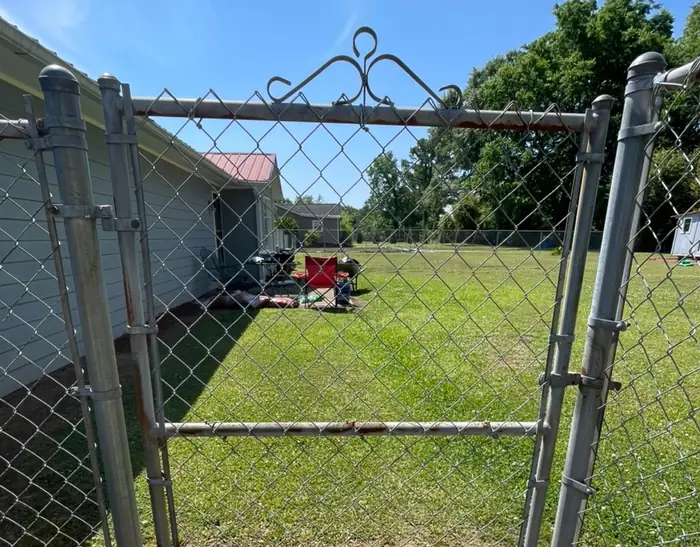
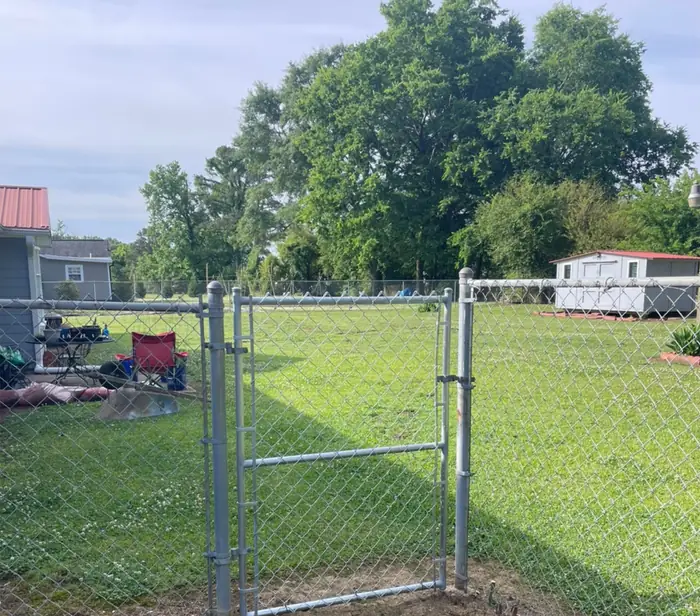
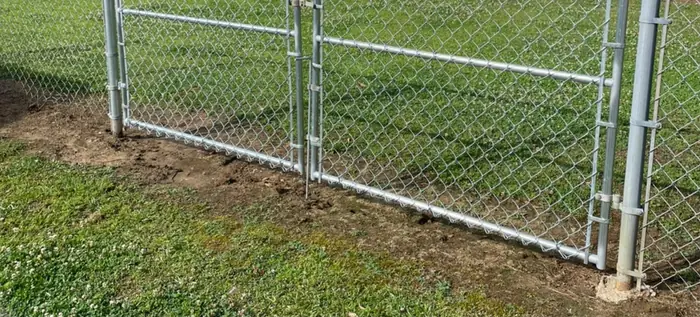
Our own photographs, taken on the job.
Often booked together
Related work
These come up alongside fencing often enough to be worth mentioning when you call.
Deck Building & Deck Repair
New decks built, and old ones sorted out: boards, railings, stairs and the framing underneath.
What's involvedSiding & Structural Repairs
Damaged siding, rotten soffit and fascia and spongy subfloor, cut back to sound wood.
What's involvedPressure Washing
Driveways, siding, walkways, decks and patios, washed at a pressure the surface can actually take.
What's involvedNeed fencing in Rome?
Send one photo down the length of the fence, one at the base of a post, and say how many gates. A new run then gets a short visit, because the ground decides most of it.